Would be great if someone would invent a high powered directional-microwave-tazar-thingy that could be used to fry car alarms from a distance.
From where i write this - the intensely populated uppper-west-side - there has been a car alarm going off intermittently for about the last 2 hours. It is probably stressing out the several hundred people who are in range, hence inflicting thousands of dollars of pain and suffering.
Taking a sledgehammer to the car is very tempting, and as far as i'm concerned absolutely justified, but it would have the downside of probably putting me in jail. How much more satisfying to fry a car's innards from a 5th floor window.
Sunday, June 22, 2008
Product request: car alarm fryer


Monday, June 09, 2008
The American service paradox
America is a wonderful place that revels in its leading edge technologies and superior service culture. Much of that is, much of the time, perfectly valid. But it seems there are various blackholes into which the latest techno wizardry and service with a smile disappears with a poof. Healthcare, finance and telecomms industry are three not insignificant industries where my recent experience as a fresh off the boat new yorker suggests much could be done to improve the situation with a dose of scandinavian efficiency.
My darling fiancee (more to come in future installments) has been witnessing first hand the need to improve the service experience in healthcare. Not only is the quality of the advice for her badly mashed up foot particularly patchy and inconsistent, but the process reeks of inefficiency. Having had a number of surgeries in the hospital, last week she had to fill out a whole bunch of
additional paper forms about some other procedure, all requiring the same mind numbing and time consuming repitition of standard info such as address, insurance providers etc. This is not only inefficient it can also affect the service experience - one of the times she noticed that the basic dates for the operations had been entered wrongly on a bit of paper, potentially resulting in all sorts of trauma.
My own experience of US finance is poor. Coming from First Direct in the UK, am staggered to find myself swimming in paper and a morass of expensive and impenetrable fees that are applied to you by banks for most of the functions associated with merely being alive. Getting my salary paid direct debit rather than by cheque is harder than it should be (can't remember when i last saw a cheque before arriving to the US).
And perennial favourite telco rounds out the list for my triple waaaaammy. As the nation crowded round their sets trying to watch Big Brown cheat history on Saturday we were frustrated as the local monopoly provider Time Warner had blackouts over the whole of the upper west side. We ventured out to a local bar which mysteriously seemed unaffected. On both the broadband and mobile side (Apple's singlehanded efforts notwithstanding) the US is a lumbering giant - an embarassment to this nation of nation builders.
Whenever I can I interact with these guys via their website, as to dial an 800 number is to consign yourself to a desperate game of eternal loops, bereft of logic, feedback and feeling, where the winning prize is a date with a bored and surly operator with interest in nothing except churning your call. Lots of room for these companies to start decentralizing the service experience back out to the edges and figure out how to let us better help ourselves, and each other.
Friday, May 09, 2008
What business is the Holiday Inn in?
Greetings from the Holiday Inn Express in Hammersmith - in the twilight zone between living in London and living in New York. Flat is packed, bags are bulging & Heathrow beckons. But I couldn't pass an Internet connection without asking the question - what business is Holiday Inn in?
I think it's the "affordable business travellers" market. The problem is that a customer segment is not an experience. The Internet connection here provides the example. They have a plug in cable, but the browser the opens up a page asking that you enter in your credit card details and address in order to pay £15 for 24hrs access. That experience is terrible - they do not even allow you to bill to your room.
The hotel have outsourced Internet provision to an intermediary as they don't think they're in that game. Nothing else is obviously outsourced - hot water, bed and food are considered core. Sure, go ahead and price discriminate for movies or the mini bar (or the Internet) if you must, but make it as simple as typing in your room number on the screen or just grabbing a bottle. an easy and integrated Internet experience is not a fundamental requirement of today's travelling business exec on a budget, I don't know what is.
Saturday, May 03, 2008
Note to Tyler Brûlé and departing EOS employees: Service is relative
I was happy to see the return of Tyler Brûlé's Fast Track column in today's weekend FT. It provides breezy opinion-rich accounts of the life of business travel of the black credit card variety - no Little Chefs here.
Despite regular suggestions from an unbelieving public that Tyler's column, which charts the antics of a diva-like jetsetter stomping carbon footprints around the globe, must be the handiwork of one of the FT's relentless micky takers, the man does actually exist. Tyler made his name founding Wallpaper* magazine and is now back with Monocle - a cross between the Economist and, well, Wallpaper*. He does indeed live a colourful life, bouncing around the globe with boundless enthusiasm. I've met him several times and enjoy his company - though can't keep up with his travel tales, since Nokia's travel policies make me turn right at the plane door.
And business travel is the subject of his column today. He is shocked by the failure of EOS, an all-business-class airline that jetted execs between "London" (or Stansted, 40 miles north) and New York. He provides some lessons in hindsight, but I think he misses the most important one that applies to just about any "all elite" service such as an all business airline. It's an oxymoron.
Elite is relative.
It's not just about having more leg room. It's about having more legroom than you.
Of course, I'm humble (see above note about turning right) and can't afford to have an ego or let such superficial, competitive thoughts enter my mind, but how many fat cat businessmen are as charitable as me, St. Stephen? These people eat babies for breakfast and oneupmanship makes them tick. They're unhappy with a million dollar bonus if their mate gets more. So I'd suggest that a good part of the value they receive when their secretary pays several thousand pounds for a flight ticket is comprised of exhibitionism and the feel good sense that comes with attaining what others can't get, and want. Gore Vidal put it well, "It's not enough that I succeed. Others must fail." And there's no point in succeeding if you're hidden from view in a separate airplane and a separate airport.
I'd hazard a guess that the Venn diagram of people rich enough for such premium services, and those immune to such posturing has not much by way of overlap.
With that in mind, am interested in how Singapore Airlines will manage the experience for their customers of their new Suites product. It uses the massive space on the A380s to take first class to a new level of exclusivity, providing enclosed cabins for those paying £6k each way to escape from the crowd. But, as a word of advice from me - don't cut them off too much. Give the execs the joy of jealous looks from those traipsing to economy class, or the ability to share a smug smirk with their fellow cabin-travellers. After all, if good service was everywhere, it wouldn't be good any more.

Thursday, May 01, 2008
Stephen's Charitable Foundation for Household Appliance Engineers
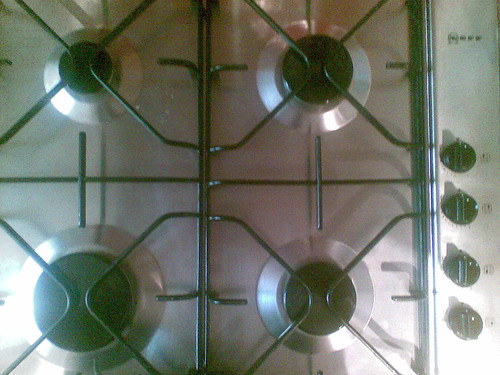
Continuing to document my service experiences good, bad and downright ugly, today's gas stove engineer was probably among the most expensive experience on a per minute basis. £70 for approximately 600 seconds (most of which involved opening his magnificent toolbox and displaying his wares). I really felt like a chump - scared off by the fiddly screws and 50,000 volt mini lightning strikes that the ignition switch creates that can floor a rhino (maybe).
However, I blame Google - I tried various terms relating to "sticking ignition on NEFF stoves" hoping to find some forum of technically-adept housewives chatting endless about modding their domestic appliances, but oddly the cupboard was bare.
So, who needs to be a lawyer earning $700/hr - you can double that by just grabbing a toolbox and finding dopes like me wrestling with domestic appliances.
Tuesday, April 29, 2008
Coming to America. With thanks to the US Embassy.
(Pic from National Geographic, link embedded)
This blog has been ambling along with no particular theme - an aide memoire of things that make me go aha or err. But I have noticed within me in the last few weeks an urge to reach for the keyboard when confronted with especially good service. And for regular readers, my Heathrow inspired frenzies suggest that I love documenting bad service too (if only to save on medical bills). So, this blog is developing a service-related theme, and that suits me fine. More about that in future.
Well today's experience of submitting my US visa application was a case in point. I have been transferred to the USA with my employer Nokia and need to get a US work visa, with a view to heading over to US in the next few weeks. So goodbye London, hello New York City. Should be a relatively easy transition with Big Co supporting me, but I had mentally prepared myself for turmoil and trauma - from the lawyers processing the case in the bowels of our corporate bureaucracy to the steely faced unflinching staffers behind perspex in the Embassy who would rip your painstakingly created application to shreds for not documenting every single country you'd visited in the past 10 years, or for not including the middle name of your former boss's labrador.
Well, I was wrong. First our lawyers delivered reams of paper work in short order, with no obvious typos. And second, and most surprisingly, the officials at the US Embassy were courteous, efficient and welcoming. I did try dot Is and cross Ts ahead of time, but still I was expecting some resistance. A probing examination of my motives; a frustrating queue to be told I needed to be in another queue. Not a bit of it. I went to Belfast since the London Embassy had a month wait, and apart from the initial 2hr queue, the processing and interview process took approximately 2 minutes. A nice American lady asked me one question about Nokia, cut me off as I was getting long and boring about Nokia's impending strategic shift to Internet services and my role within it, and said Welcome to America, your visa will there in a few days (now my faith rests on the slightly less broad shoulders of Royal Mail. Hmmm).
God Bless Uncle Sam. Here I come, America. Land of the Free. And now, me.

Monday, April 28, 2008
Simon Johnson - Heathrow's finest shoe shine
simon johnson - heathrow's finest shoe shine
Originally uploaded by sdbj

The shoe-shiner is a dying breed. Despite no pressure from the menace of outsourcing (quite tricky to shine shoes by phone), this anachronistic service has been kicked into touch by our scruffy and frenetic lifestyles - bespoke Oxfords gave way to tatty trainers made of chemicals, not cows. These cheap canvas concoctions are always running to the next thing, with little time to stop and smell the polish. Simon's customers are usually running to a plane, as he plies his wares in Terminal 1 domestic departures, and has recently been seeing depressingly few patters of feet in his direction.
I got chatting to him today as I had my shoes shined. Despite his booming presence and a magnetically sunny personality (his other jobs include childrens' entertainer, actor and musician - I have his card) his quaint and comfy seats only attracted four bums the whole of this afternoon. With that kind of result it won't be long before he packs his brushes for good. So if your leather brogues are a tad scruffy and you're flying via Terminal 1, take a few mins to sit and chat with Simon and let him put a shine back in your stride.
Tuesday, April 15, 2008
What happens to us, when our cars get increasingly smart?
I have a 5yr old VW golf, and one of the reasons I like it is that it lets you kill yourself if you want to. Well, more specifically, it lets you drive without your seatbelt on and does not disturb the peace with a wretched warning bing bing, that seems to be the preserve of most cars nowadays. If the car really thinks you'll injure someone else because you don't have a seatbelt on, why not kill the engine. If it thinks you'll injure yourself, same question, but also another one - why not give me an option saying, "I'm happy to take the risk, bud". The problem is with stuff like this, that you can't ever do things outside the proscribed intentions of faceless mandarins thinking up use cases. Maneuvering around a parking garage or jumping in and out of the car to post letters aren't in defined use cases, and fall through the cracks.
Same with GPS. Whole villages are being cut off by lorries that take short cuts and get stuck - oblivious to reality, the drivers outsource reason to a $200 plastic console on the dash.
And according to today's USA Today, 5 US states have introduced legislation requiring people with drink driving convictions to blow through a breathalyser contraption in order to start their car, and you have to do that at random times to keep the motor running. Wonderful idea, I guess, but what if they have a sober passenger? How soon before it's a requirement on all cars?
Seems like quite a dangerous alignment of increasingly capable technology and increasingly pliant populace which is seeing us outsourcing decision making and responsibility to faceless others and none too smart black boxes. I, Robot, here we come.
Sunday, March 30, 2008
First taste of Terminal 5. Nice building, shame about the moving parts.
Just had my first experience of Terminal 5. Thought I’d pen some notes about it on the plane, rather than bite the head off a chicken or similarly handy rodent.

Heathrow’s Terminal 5 is a slap in the face of the current UK government’s love of big tangled public private partnerships. It was surprisingly delivered on time and on budget primarily it seems because there was actually somebody responsible for getting it done. While there were subcontractors, there would be no mealy-mouthed blame-shifting and finger pointing when it failed, was shoddy, late and over budget, as big projects in this country inevitably are. There would be no tangled webs of intricate outsorcery, no rapacious subcontractors sucking eagerly on sweetened, risk-free deals, only to sue at the drop of a hat for little breaches of large contracts. With this government’s prediliction to fudge and quango (is that a verb? should be) there is often no real sense of right and wrong and clear ownership. The lawyers and economists trough happily, while Joe Public normally gets trampled underfoot.
So my heart was lifted when I heard that Terminal 5 touched down on time with perfect poise – one in the eye for common sense I thought. And the pictures of the terminal were indeed not bad for London, used to dealing with the infra-tragedy that is Heathrow Terminal’s 1–4 – a creaking, dirty place that makes Zimbabwe look like a bation of good management.
And how many airlines have the luxury to have their very own terminal, all to themselves? BA must have been delighted themselves that they could finally set aside their usual excuse of shoddy experience – not us gov, it’s BAA – and work to make this the best in flight experience money and technology could buy. The website holds little back: “The creation of Terminal 5 was a once-in-a-lifetime opportunity for us to redefine air travel. Our aim was to replace the queues, the crowds and the stress with space, light and calm.” Fat chance. Their proud claim in the adverts of 10 minutes from check in to departure gate even had me rather excited. Fuggedaboutit.
The news stories started to flood in – perhaps with a sense of schadenfreude. I checked mine – still on time – and checked-in online at BA’s site - all working fine.
When I arrived to catch my flight I had left half an hour to get through security. In terminal 1 there is a separate section for Exec Club members and biz class, and it’s really pretty good most of the time. When I arrived the massive foyer of Terminal 5 it’s not obvious what you do. I asked where to go through security, and they said – South securty was full, so go to North security. Er, ok. Any Exec Club Gold Card option? Er, they might be one over in South side, but it was “miles away” and not worth the bother.
>> Figuring out where security was: 2 minutes.
So I head to the North security. Nobody had told us that there doing biometric checks before security. Seemed to be taking pictures of everyone. Why? Apparently because international and domestic passengers were mixing up. And the point of that is what? This system was completely borked. Long lines just to get through to the next lines waiting for security. As the queues mount, flustered staff run around on walkie-talkies. There are absolutely loads of them with blue Tshirts on offering to help. But it seems they spent on all money on greeters and none on the security desks. So, they decide that anyone on international flights can just go through without getting their brained scanned, iris extracted or first born branded, or whatever they were doing. We trundle through to cattle station 2 security.
>> Waiting in a fruitless line to get a biometric whatsit taken, but then just being ushered through: 20mins.
Inside a big airy hall there are about 50 security machines. Unfortunately there are only about 5 open. I hear someone say there’s a fast track line over there, so I trundle through (even though wasn’t biz class, i reckon my gold card sort of counts, no?). Getting to the second line it doesn’t seem to be moving. There are about 10 staff on the solitary machine, and each seem to be having long conversations with each passenger and moving at a glacial pace. A bunch of people rush to the front of the queue with that serious “i’m going to miss my flight but i’m also a bit embarassed to be queue jumping look on”. We stand around. As am getting close to the front, an uninspiring lady says – “go to the next machine, this one’s broken”. Sorry doesn’t seem to be in their vocabulary. Trundle off to next door machine. Bags go in. Laptop stays in bag – yay – and am through security.
>> Getting through the world’s slowest “Fast track” security line: 20mins
And then I have to figure out which gate am meant to be going from. Ooh look – big shiny LCD screens. near the exit from security. But no, they are for adverts. There’s a big screen in the middle of the foyer, I go there and find that I’m in Gate B45. That means getting to the shiny shuttles – reminiscent of most American airports I’ve been to. So on i hop, and emerge at the B gates.
>> Going from security to the B gates. 10mins (includes running up two escalators with bags)
I arrive breathless at the gate, and despite being after the gate closing time, we’ve not boarded. Great. Mill around for a while, and then when we are called to get on, they announce that the shiny new walkway is not working, so we’ve going to have to take steps down to the tarmac, then steps up to the plane. That’s my favourite bit about Heathrow – they always seem to have broken walkways, but this on day 4 of the next terminal seems a bit rich.
>> Getting on the plane and dozing the stress away: priceless.
So, in the end i got my flight. Yet it was just a collossal disappointment that had nothing to do with a bunch of lost bags. It was as if we’d spent £4bn on a nice shiny car, but nobody had bothered to learn how to drive it. There really should be as much thought going into the processes and the staff as the buildings, and that is where I blame BAA management for now figuring out the process better. It wasn’t a question of early hitches - this seemed like a terminal without a plan and the people didn’t seem to have been told what they should be doing. Still, the good news is maybe they’ll learn given the massive media pressue, and the roof looks nice. The bad news for me is they won’t learn by the time I have to use it again – twice – this week.
Monday, March 17, 2008
American Golf vs. Stephen Johnston - the saga continues
Lo, my trust in the perky and honest sounding chap on the end of the phone at American Golf to get me off his mailing list about 6 weeks ago was misplaced. I just received another monthly installment of the (for me) zero value, environmentally ruinous monthly mailing, again forwarded from my old address, which just made me mad. Grrr.
So this time, I wrote to them saying please remove me from the mailing list, enclosed their brochure, and then put it in an envelope (cost 35p) with a stamp (cost about the same). So, best part of a quid, and a couple of grey hairs later, I'm wondering if this is going to be effective, but rather expecting that it's not.
Friday, February 29, 2008
Spamming the spammers
There has to be an easier way to remove your name from a company's database. We've all done it - absent mindedly give out your address while engaging in a low level transation with some shop or other. In this particular example that has me riled, I was getting some new grips put on my golf clubs, at the cost of about £20 at the Sunbury Outlet of AmericanGolf - a fairly large chain of golf shops that seems to have nothing to do with America. Anyway, I signed up for the club card for future discounts at the shop, but was assured I wouldn't be contacted. However, since then have been receiving the general marketing crap by both email and post - colourful yet anodyne brochures and emails.
Since I seem to be unable to remain in one place longer than a few months, I am deeply wary about giving out my home address to marketers. Not only do I inflict annoyance on the next inhabitant of the flat for years after the original post office redirect has run out, I stand the chance of occasionally missing something that I might like, and also needlessly wasting resources and paper etc. I'd love to know how much of a company's mailings of this type are to the wrong address, or if the right address are unwanted. I suspect more than half. And that's a whole lot of global warming and lost profits.
So back to the story. I unsubscribed fairly painlessly from the emails from American Golf, but getting my name of the mailing list for their brochure fluff has been a tragi comedy. The phone number on the brochure only ends up at a store locator. So I phoned up the original store I went to and asked them to remove me. The confused sounding guy cautiously said OK, and I didn't expect it to work. It didn't - the fluff continued to come. Having just received another one I was getting really annoyed, so went to their website, searched around a bit, found another number that seemed to be more about general company enquiries, phoned it up, spoke to a nice lady, she said hang on a minute, and passed me over to another department, and a nice chap in this department said, yes, he could do that for me, did i have my membership number. No, of course not, but he was able to locate me by postcode, and then with so authentication model in place to prove i am who i am (confirmation if any was needed of the low value of these transactions), said i'd no longer receive mailings.
Will it work? I hope so - the guy sounded fairly sane.
Do I want to have to do this detective work for every company that i might someday have a relationship with? No, absolutely not.
What we've got here is a broken process for managing the distribution of my contact details and the ability for me to update my preferences for receiving marketing information from different companies.
There seem to be four approaches to this:
1. Distributed permanent addresses:
This is the status quo today. Quickly becomes inefficient as the contact information gets out of date, or my preferences change.
2. Distributed temporary contacts
This works ok for email - I could have given them an email stephen_americangolf@stephenjohnston.info for example, and then delete that email when i don't want to subscribe. But this quickly gets hard to remember who you said you were to whom, and doesn't solve the problem that they're still sending out spam emails ineffectively. This could work for a phone number, but they're expensive to do using the telco world, so would need to have some kind of web based system like Jaxtr. Again not easy to manage. Could in theory work for physical addresses, but harder to manage since you end up with physical not just digital backlog once you stop using that address yourself.
3. Aggregator
This means that one company keeps the contacts details and preferences of lots of people. I can then manage my contacts details on their site and the companies can go and get information about me - depending on whether i've granted them permission. Lots of heavy engineering, data servers etc to manage that system, and then the user control & management piece. Plaxo is the start of something like this, but doesn't seem to be moving to the B2B direction yet.
4. Distributed
This means that I have the list of my contacts and who gets to see them under my own control - either hosted by me on a server or on a trusted 3rd party site. (Certain similarities to openID here, except that this is not just about identity abut about relationships. Does OpenID2.0 and OAuth take us further here I wonder?) There shouldn't be any reason why i can't have multiple locations to store my things - so i could use Fodor's to manage my favourite hotels, Zagats for my favourite restaurants and Bloomingdales for my favourite clothes companies. I could go to their sites and say - ok, am fed up with receiving Ralph Lauren catalogues but happy to have a closer relationship with Gant. And then my inbox would respond accordingly. This would probably require a certain amount of standardization in approach, or it could be done at a sector level (all restaurants adopt a marketing outreach format from Zagats). In theory this could be completely distributed, with some kind of web protocol (XML) sitting between me and the companies that i like and informing them of the information that i am permitting them to have access to, and the appropriate way to contact me.
One of the elements of a distributed approach could be the creation of a people-generated company address book, to turn the tables on the companies who are great at getting hold of our information but seem strangely opaque about giving out their own. This Wiki White Pages could be a rich resource of company contact information, what tones to press on the IVR to quickly get through to British Airwarys or what the name and mobile number of the CEO of that company you're receiving spam from is. Then if you consistently get annoying material from a company that does not sign up to this system automatically, you can return the favour and send multiple requests to their CEO to stop spamming you. Should get the point across quite quickly.
Is option 4 a pipedream? Something like this seems to be increasingly important with the growing eco-awareness, antipathy towards waste and need for better ROI on marketing campaigns and also increasingly feasible with the arrival of web standards and a browser on every phone. If and when something like this gets off the ground, here's hoping that American Golf will be one of the first to sign up.

Saturday, February 09, 2008
Is it safe?
Is it safe?
Originally uploaded by sdbj

Just stayed in a hotel in Berlin.
Good news - there was free Wifi
Bad news - it involed a 26-digit WEP key to get to it.
This took me three goes to get right, and at the end I was cussing and spitting like a navvy. A competitive advantage in hotels would be to make getting on the Internet as easy as turning on the hot water. Low tech solutions such as cables work fine for me, but if it's got to be wifi, a simple human readable name is surely enough.
Monday, January 07, 2008
Happy New Year - and a resolution
A new year and new resolutions. They seem to have a similar theme - get fit, get better at my job, and do more for charity. Don't have a particularly good record at achieving them, but I see it as a war of attrition - in the long run I'll grind them down. This year i added one - do more blogging. It's not much a resolution, but it's one of the things I enjoy, and if anyone else benefits, that's a bonus.
Now as my New Year resolution suggestion to the rest of Nokia, I'll propose one -- get better at listening, in particular to our expert users. It's sometimes hard when things are moving so fast, in particular as we're trying to come up with new services ideas at the speed of those nimble startups, but i really think a lot of the time we can save ourselves pain and expense by listening more. Here's a case in point - this is a round table chat by a bunch of Nokia-focused external bloggers that was held at Nokia world in Amsterdam in December.
Carlo Longino pointed me to this, and it's quite fascinating hearing people talk with passion, knowledge and plenty of opinion about our range of products and services. As Carlo said in his email, "I know Nokia does tons of research on its customers and users, but I thought this was a good example of how social-media marketing isn't just about spreading the word about a company's products, but can also be turned around and harnessed by the company to help it build better products."
I think this is a great example of really valuable insights from some of our expert users that we can harness - for free. Let's hope that Charlie and his new team of Nokia bloggers and social media gurus harness the outboard brains of these guys, and work out how to turn their insights into new products and service innovations, rather than just convince more people to buy the current stuff.
Happy New Year to one and all. Looking forward to talking a bit more and listening a lot more.
Saturday, December 15, 2007
C'mon BA, get a grip
Now, I'm no UI designer, but I do happpen to be a human being. And as such this rubbish on BA's website really irritates me. I have no idea who designs their website, but please - telling your customers they can access "post-PIN content and functionality" is just a horrible mangle of pretension and obfuscation. And getting someone to click a box NOT to be remembered just completely does my head in. I've been griping about this for months already - but who do I tell? What are these guys smoking? And can I have some. 
Friday, December 07, 2007
Seven suggestions for an Innovation stream
This week I've been in Amsterdam, in Nokia's annual jamboree - the rare occasion when the Finnish modesty and reserve is traded in for a colourful look-at-me celebration of all our cool stuff, good people and great partners. It's actually quite glitzy, and I hesitate to say, "American" in theme, and getting more so - a hedge fund manager I met at lunch said this was the first time that he felt Nokia was behaving like a media company. He thought that was a good thing, and given that he owns a large chunk of our stock, I didn't like to argue. And it is true that this really was a very well organized, vibrant and confident conference with some strong messages about Ovi and our new Internet services ambitions that made people sit up and take note. However I'm not sure that associating with an industry that has - in parts - an imploding business model and famously dubious business practices is necessarily a good thing. But that's for another post. This post is about innovation seminars, and what makes them sing. Or sink.
I can honestly say that one of the highlights in my 4 years at Nokia was being asked to be the chairman of the innovation stream at Nokia World this year. Nokia World is a Big Deal - we spend a small fortune putting on a real spectacular two day show that highlights most of what we are as a company and it involves all the top management. It's not completely clear why I was chosen; my co chair - Lee Epting, the VP and head of Forum Nokia was a more obvious fit in terms of the other moderators. Probably had to do with the Speaker Series sessions I host, and the fact that I've been mouthing off about Internet innovation recently.
Anyway, I'm writing this post to consider what the best possible innovation stream at a conference would look like. In short, I don't think we really got it right -- the audience in our session started off large and gradually shrank over the 2hours, losing energy all the while, and in terms of format it was fairly standard stuff - 4 presentations with just a few Q&As at the end. I felt the topics were actually interesting and relevant - Nokia's UI vision; mobile payments and NFC from Citibank; Yahoo! on web development and a session presenting the winners of the Open C developer challenge competition. The latter was the highlight for me - interactive, interesting and the demo of the winner (MobiTubia - lets you browse YouTube videos) was really cool. Ironically, getting the N95 live demo worked fine, but the lady from Citibank was tripped up by the first of her videos not working. We didn't have any really cool gimmicks - we killed off the audience voting feature since the tool had SMS disabled and we weren't convinced of the usability of the WAP portal. The irony of all this was that there was a huge amount of stuff that we could have talked about and showed off - just a few yards away in the Expo the innovation stream had 19 demos with some of the coolest gizmos, gadgets and services that I've seen during my time at Nokia, including the mobile web server, Point & Find, voice recognition and an eye-controlled UI.
The contrast with the panel I was on the Economist Innovation Awards Summit a few weeks ago was stark, and also the Internet and innovation Conferences we've had at Nokia over the past couple of years. The first Nokia2.0 Conference we organized in March 2006 received a huge amount of positive feedback and led to a set of tangible actions.
So, with these in mind, here's some guidelines for what could be the bones of innovation stream 2.0, in next year's Nokia World or similar event. Would be interested to have feedback from participants of the Amsterdam session, and general thoughts on what would make an innovation-themed session as good as it can get.
1. Suffer the children
Any panel on innovation should probably tap into what the real innovators are thinking - and in the web space nowadays that means kids, not fusty grey suits. I first saw a panel of kids being interviewed stage at one of the Web2.0 conferences when Safa Rashtchy did this to great acclaim (my favourite was the kid who said he'd never pay a penny on DRM'd music from iTunes but was spending $50 a month on ring tones). Don Tapscott's New Paradigm group has done this quite well too. Nokia has hundreds of expert groups including teens, we should just reconvene one of them on stage. This is what I was trying to move towards with the call for videos on my blog, but I didn't push hard enough to make it happen.
2. Do an Oprah
Always fun to give stuff away, and Nokia's been more generous recently - giving away phones used to be taboo, but now it's more common. Random gifts under people's seats can become muted if people expect it, and can have a downside - as Oprah Winfrey dramatically discovered.
3. Pack in the powerpoint
The presentation by our user experience director was - I thought - rather beautifully done, with a new kind of presentation that it half video and half powerpoint. The crowd asked for more specifics about our touch screen strategy, but we weren't able to talk about that. In future combining great presentation graphics with data points makes sense, and in any event, the time for dull slides with small fonts is definitely over. If there are no powerpoints, then maybe the answer is to adopt a conversational tone...
4. Conversation not presentation
Nobody wants a sales pitch at these events, however most powerpoints slip into a few sales-y spiels at some stage. The Economist event was different - three of us were up on stage with Tom Standage - a super sharp guy and not used to being overly nice to business types. We had no idea of the questions, apart from they'd be about innovation, so there was little time to prepare a spiel, you just had to answer the question. Am actually thinking about inviting Tom to join us on stage for next year, if am involved.
5. Lighten the load with a dash of humour
One of the best sessions from last year's Nokia World was Clive Anderson. Ok, he's not known for his innovative views on technology, but provided a wonderful and insightful moderator. One of my favourite comedians is Stephen Fry and his recent blog posts / tomes, have proven that he's no slouch when it comes to geekery - for all those with a spare hour or three, peruse his thoughts on smartphones and the like here. So, my second invite would go out out to Stephen Fry. Stephen - fancy a chance to deliver your message to the heart of the borg?
6. Shiny, new things. Aka more signal, less noise.
Demos and launches are always noteworthy, and make people think there is something new and unique happening at the event they are happening to be at. Nokia World happens just once a year at about the same time, so why don't we make a point of launching a bunch of cool products here, rather like Apple does at its annual conference. Even if we don't launch products, let's make announcements that people are looking for, and issue a blizzard of statistics - people love data. Think Mary Meeker at Web2.0. Less of the fluff, and more of the "Phwoar, that's so cool!".
7. Breakout the backchannel
The audience voting worked ok in the end using WAP in other sessions, though i still prefer SMS. What was missing, and something we discussed ahead of time since we'd had this in some internal conferences, was a "hecklebot" to display comments from SMS or in an IRC-type format. This can be quite disruptive if managed badly - people tend to be quite unforgiving if they're not impressed, but it does make for a real sense of electricity in the room, and can work wonders at creating a sense of inclusiveness.
Funnily enough, looking at these ideas, it seems that the new Nokia values have them embedded (these are, btw: Engaging You, Passion for Innovation, Achieving Together & Very Human). Hmm, maybe should have brushed up on them in the planning stages...
Anyway, we live and learn. Let's hope we take some of these learnings into account next time.
Tuesday, November 13, 2007
Looking for videos of kids talking about mobiles
Am giving a presentation at our biggest conference of the year in December - Nokia World and I thought it'd be quite cool to open it up with a few videos of kids (which I guess is 5-20) talking about their mobiles.
I guess there'd be 4 questions:
- How do you use your mobile today?
- What do you like best about it. What don't you like?
- What would you like to see happen to mobiles in 20 years time?
- What do you think about paying for stuff on your phone? Would you like to use it instead of money?
Am only looking for a few (10-15) seconds on each issue and they'll probably be edited down anyway. The more colour and enthusiasm the better. The video montage would be shown to hundreds of Nokia's customers and employees as an interesting - and hopefully amusing - intro to a bunch of innovation related presentations.
As it happens, I don't really know any kids of that age, and am a little reluctant to stand around school gates with a video camera. So if you know of any telegenic kids with loads of opinions about this stuff, feel free to point a camera at them and email me the resulting video (should be under 5MB) to stephen dot johnston at nokia dot com.
Saturday, November 03, 2007
Nokia's innovation story part 2 - Internet innovation
Apologies for the tardiness of this second and final installment of this gripping story - a 2 day USA business trip has turned into a 10 day one, and my admin has gone to pot. Now back in UK, the advantage of jet lag is it gives you odd windows to do stuff. Carry on...
So, we could go on forever counting trends, but rather than just watch the world spinning ever faster we need to act. In the pulsating, chaotic maelstrom of today's globally connected economy, we need to put a stake in the ground, and I think that starts with defining what industry we're in. This is not as easy a question as it once was - we used to be in the telecoms industry, but no more. It's probably best described as the converging digital industry, and that now touches almost every sphere of life. Or to put it another way, we used to be a product company, and now we're a product and services company.
The red thread running through this is, in a word, the Internet. It brings accelerated innovation into disparate industries - fashion, travel, finance and sport to name just a few, and combined with mobility, heralds disruptive potential in a host of new markets. As such, the focus of our current innovation activities is the Internet. That's what lies behind our somewhat strange-sounding statements about becoming an "Internet company" - we are talking about the way we work more than about what we produce. It's about learning from the most innovative companies, especially startups, who have the Internet in their DNA. Of course, a big established, product-focused company such as ours will not have the agility of a fleet-footed startup, but heck, even bigger brutes than us have been learning the steps for years. And even that's not the point - you ask any garage full of pizza-scoffing, code-writing 18 year olds how they're going to scale their startup globally and the answer will probably be that they don't know, or "get bought by Google" (unless of course one of them is called Zuckerberg). Ensuring that Nokia's history, expertise (esp in mobility), size and scope is an asset not a liability in the Internet era is for me, the challenge du jour.
However, Internet innovation is an unwieldy beast, and I'll divide it up by stakeholder group - customers, employees and partners / developers. I leave out shareholders here, since they are the outcome, not the input to these efforts. So, what does Internet innovation mean to each of these groups for Nokia?
- Customers Internet brands have a deep relationship with their customers - either on the individual level (e.g. Amazon) or the aggregate (e.g. Google). They collect data about the service relationship and use it to improve the offering. Needless to say, Nokia currently has little or no relationship with the end users (customers, consumers punters, peeps...) of our phones. Our efforts here need to be about establishing a relationship with the end user to learn more about them, and helping them improve the experience of connecting with what matters most to them. One of the interesting angles to all this is IPR - how are we going to develop solutions together with customers, and not just expect them to hand over good ideas to us for free. Innovations in this area, together with payments to our customers (in cash, in kind or in kudos) will be key.
- Employees We need to ensure that our employees are as informed, motivated and effective as those in a startup. In a small company it's easy for everyone to know everything that happens, however siloes emerge naturally as the company grows. Information velocity matters - the right ideas need to find the right people, quickly. Motivation is an interesting topic - Nokia currently sits lower down the risk / reward axis than a startup. Should that change, if so how? And finally effectiveness - we need to figure out a way to let individuals take control and see that they are making a difference.
- Developers and partners Our external network of developers provides the content - the applications and services, that make our stuff better. We have certain core offerings, but we need to be as open as possible for web developers to build on our platforms. Our external developers need to be able to make money. And they need to be able to scale their applications to connect with the installed base of Nokia phones (one of our greatest assets) and find it easy to connect with the technologies and people inside the company. Our internal developers need to be free to innovate quickly and get rewarded for their efforts above the call of duty.
So, here's a selection of ongoing innovation activities we're doing that relate to the above areas.
1. Customers
This is probably the most visible part of the Internet innovation story - since it is about the products and services that we ship. This can be seen in two ways.
First, bringing "today's" Internet onto our devices, so that people can connect with their existing web services. This means that our browser needs to be the best in the world at squeezing a normally big screen web into a small screen real estate. Our current browser is damn good at this, and as an open source effort and shares much of its codebase with the iPhone one. It also means that the web needs to be natively integrated into our software, to turn what used to be known as applications into services. The core of the phone - contacts, calendar and call history need to benefit from web connectivity in ways they don't today. Another issue is that people are fed up with "empty icons" - which when pressed ask you to "enter your settings". This is offputting and intimidating for users, and dumb from a business point of view because we are fragmenting the valuable attention and real estate, distracting the user from using other things that work well. This is the result of a fragmented value chain that was not organization not user-centric. Hopefully it is changing now as operators, distributors and device makers realize that if they don't get figure out how to make a smooth, joined up user experience they'll wither on the vine.
The second and more interesting way that the web will be coming to our devices is when it moves from "stateless" to contextually aware. The experience that you will get from your web service will be different because that service is interacting with the intelligence in the device. This will make services much richer, but also involve the consumer more directly. Companies will need to figure out what deals will entice them to give out their location information in order to receive tailored offerings for example (anyone thinking of doing this without their permission, better find a new job). This is in essence the three dimensional web (as in the title of this blog) and I see it involving 5Cs - context (e.g. location, proximity) contacts, calendar, call history and content (stuff you've made, recommendations and linkages you've created).
One other point to mention here - we'll be seeing a lot more use of the phone to merge people's real world with their online and virtual personas.
Nokia doesn't talk about future product (or services) releases, so there's not much detail here, but now that there has been a major reorganization to create a services and software group, new acquisitions (Gate5 and Navteq for navigation, Loudeye for music and Twango for social networking) as well as a new brand vehicle to launch consumer services (Ovi), expect to see a lot more in this area in the coming months, and check sites such as womworld and noknok and other forthcoming blog sites for details.
2. Employees
Nokia's culture and values are one of its major assets - there is the assumption that people from all over the company will help you out if you ask them, and there is a mountain of stored knowledge in the employees' heads. However, as with any big company, it's not always easy to know who to ask, especially if you're new (I remembered with dismay when I started they didn't have photos next to the names, and I was constantly befuddled by long Finnish names that seemed to consist entirely of Ks and umlauts). Information sharing - often and early - reduces the danger of not invented here, duplicative products and repeated mistakes.
This can be done as a one off event or as a process. We worked with IBM's innovation team last year and held a "Jam" - when each of the employees was asked to contribute to the creation and dissemination of our Internet strategy during a 3 day online meeting. This will probably continue on a regular basis, and meanwhile, at the micro level, we've been making heavy use of blogs and wikis. One story illustrates how this came about: A colleague from the research group, Harri Lakkala, was fed up with using the traditional knowledge management and collaboration tools, so started hosting his own wiki solution for his projects on a spare computer under his desk back in 2003. Word spread about these new tools - which are basically just simple web pages editable by anyone - and soon he was hosting hundreds of wikis with increasingly business critical information under his desk. Happily our IT group figured out that if you can't beat them join them, so now wikis are supported internally and used regularly by over 6000 of our employees. Similarly we've got about 300 internal blogs (and a bunch of external blogs) which have helped to change the culture to become more open and collaborative.
You don't have to be a psychologist to realize that cash is not the only motivation for employees. I'm constantly amazed at how much discussion and active participation there is on the mailing lists about issues that are not on people's short term objectives plan. So, while innovating the compensation will undoubtedly be one of the actions discussed, the most obvious motivational efforts are about giving people the feeling that they are in charge of their own destiny and recognized and rewarded for going beyond the call of duty. This is what happened to Harri - he was given an innovation award, saw his project go mainstream, and is now working on a new team dedicated to bringing about wide-scale change across the company.
On a more systematic basis, we have created a process that allows any employee to have the chance to create a new application or service: Nokia Labs. This was the top recommenation that came out of an Internet innovation conference we organized last year, and is intended as a handy place to showcase they many early stage projects around the company, share the ideas, improve them and engage the creator as "intranpreneur". This has now grown into the public Beta Labs and the internally facing, earlier stage Alpha Labs, which is where many Beta Labs ideas come from.
3. Developers / partners
The third leg of our innovation story concerns developers, and here we have an organization that is devoted to serving them full time - Forum Nokia that is leading most of these efforts, together with our research centre. Some of the more exciting web efforts here are the web runtime and widgets (and widsets for a J2ME service) and the contacts book extensions (e.g used by Gizmo). There are many open source efforts going on, such as the S60 browser, Maemo development platform, Python for S60, Affix (a bluetooth protocol stack for Linux), Hildon touch screen app framework, Carbide development tools, the mobile web server, and Open C which which allows web coders to more easily code for S60 using C and C++ libraries.
In this category we'd also include outreach to universitites, academics and researchers (such as via research.nokia.com and through our collaborative work at the NRC office locations of Palo Alto, Cambridge, MA for MIT, and Cambridge, England where there is a nanosciences lab). Also, corporate tie ups abound, with both the gorillas (e.g. IBM) and the startups as either developers or technology partners and vendors.
Forum Nokia starting to extend beyond the traditional developer demographic with more consumer focused platform MOSH, and the regular Mobile Mashups have started a discussion forum with VC's and start-ups in Silicon Valley, the most recent on on 1 Nov on the subject of Mobile Social.
So, probably time to draw breath and leave it there. I'm fairly confident that this review only partially identified the range of Internet related innovation activities going on around the company, so more than happy to be put right by well meaning readers, and hear about areas where you think we might not be doing enough. But for now, there's quite a bit to be working on.
Friday, October 19, 2007
Nokia's innovation story, Part 1 - key trends
Blimey, this is turning into being quite a tome. It looks like there's going to be two parts to this story - first, some of the key trends that set the context for the discussion, and second a selection of the innovation activities that we have been working on recently to ensure we accomodate these trends.
During the conference mentioned in the previous post I only got to talk to about a few of these ideas, but I wanted to document them while fresh. It's worth bearing in mind that everyone at Nokia will have a different take on this universally discussed, but rarely adequately defined theme of innovation - since there is an assumption that innovation is owned by everyone. In terms of what innovation is, this was a topic of the night before, and the Editor of the Economist's favourite definition, courtesy of Goldman Sachs, was "fresh thinking that creates value". That works for me, since it reminds us that new ideas alone are nice but irrelevant if they don't have an impact.
So, to the trends. As a company we are grounded in fundamental trends. Nokia is full of fact-loving engineers, and there needs to be data and evidence for what we do. We're unlikely to jump like a jitter bug to the latest shiny thing. That means that sometimes we may be seen as cautious, and may not get it right first time, but when we do it, we know we're doing it for the long haul. (N-Gage comes to mind). When I joined Nokia in 2003 in the delightfully named Insight & Foresight group, one of my tasks was to write the macro economic section of the annual Nokia WorldMap of the top trends in the converging digital industry. This was organized in terms of consumer, business, technology, macro trends, and some overall disruptions, and had about 50 trends that were the summary of a year's worth of analysis of the team. These are updated every year, and I picked a selection that I found most compelling to set the tone: the net generation, the search for authenticity, the information wake, harnessing collective intelligence, mass customization, consumerization of the enterprise (aka Enterprise2.0) and leapfrog innovation. So, now to provide more meat on the bones:
The demographic shadow of the baby boom generation is the net generation, today's 14-30 yr olds that are globally the most influential demographic, accounting for 25-40% of populations (highest in India and Pakistan) and something like 80% of consumer tech purchases, since they advise their parents (data from Don Tapscott's Net Generation project). They live in a polychromatic world (one of Joi Ito's favourite phrases) - vibrant, instant, colourful and multichannel, sharing their lives, often in breath-taking technicolour intimacy with the world, but more often just the people and communities who matter to them. These are people used to being exposed to 3000 brands a day, but not letting them stick. They filter out noise and froth, as if reared subconciously on the Cluetrain. They're the teflon generation, which drives traditional marketers crazy. They're used to being intimate with each other, and ironically, can also be intimate with brands, in particular those that demonstrate authenticity. Authenticity here can be defined as tranparency coupled with high performance, in areas such as environmental sustainability, provenance, employee relations and conversations, not marketing. It means cutting out the spin and the intermediaries between people and the things they want to connect to. Relationships - undiluted. Authenticity means people and companies articulate and share their own unique values, they don't just follow fads. And perhaps more than anything it means mountains of data. There is a high bandwidth for information, and the filters are expected to be client-side. The more blogs the better – not just from the CEO (unless he or she is interesting in their own right), but from the product managers who can talk with loving micro detail about obscure features. The data doesn’t need to be packaged – the rawer the better, otherwise it seems patronizing. Hence the carbon footprint of a packet of crisps – let the people decide. Data about the provenance of things and people is everywhere nowadays, and the smart companies are collecting and analysing it to create better services. Last.FM, Amazon and NefFlix filtering that learns your taste and suggests new things being a simple example. Up til now, these smart recommendation engines have been constrained by the paucity of useful, unique data sets that help the services know that your favourite thing and mine are one and the same. Similarly singers and their products, with the notable exception of a number of Stock, Aitken and Waterman clones from the 80s, are generally unique and different. Meaning can be layered on top, and smart algorithms do their bit. The most obvious (and bankable) recommendation engine to date is of course Google, that uses that wholly unique asset, the URL.
So, here I believe lies the potential of the mobile web – opening up new datasets for analysis and recommendation, with monetary values far in advance of the pennies that vendors pay for the click of a potentially interested surfer. If Amazon can use its smarts to get me to a buy a book based on my behaviour, why not allow someone to recommend what car I should be driving based on an analysis of my actual life, not just the slice of me inferred by my purchasing habits on one book-orientated website. The beauty of the mobile device is that it's not only smart, but connected. According to a China Mobile study, 91% of owners keep within 1 metre of them 24/7. Unlike traditional surfing through the web, this mobile device is moving with you through the "three dimensional" (i.e. real) world, leaving an information wake. The mobile device has the ability to capture and deliver a vast number of different data streams, such as location, who are your real friends (ie those people in your mobile phonebook, not the pale imitations found on social networking services), who do you call the most, and even in future, what you buy, what you eat or how you exercise. This data is created by the user and as such is – or should be - owned by them - getting them to part with it in order to receive useful and services is one of the primary innovation and creativity challenges of our generation. So far, I don’t see clarity in the industry on this and it’s dangerous. We allow Microsoft to create the tools that allow us to write novels, but do not expect them to claim ownership. Similarly, we hire the phone companies for the reason of connecting us with people we chose to connect to. If in doing that, we create a digital trail of commercial value, it would be folly not to assume that most of this value resides with its creator.
Smart companies will figure out how to get the customer to let them tap into these data streams, and use them to generate collective intelligence about what the customers want, often before they even know they want it. Automating data collection and feedback on products will be a breakthrough in terms of productivity, and here again the mobile has the potential to be part of this story. I often wonder why on earth the operators don't actually do something useful with their aggregate view of mobile users. How hard would it be to deliver very powerful real time traffic reports, just based on observing the anonymized progress of the swarms of phone-toting commuters?
Product innovation will be a lot easier when every product has an online service component providing usage information to improve the experience. Who would have expected that rowing machines - a product if ever there was one - would be turned into a social-networking compliant "rowing experience" by bundling net-connected service with the product, allowing you to race against other strangers and friends around the world. With products that can now talk back and among each other, it's a lot easier to have an aggregate view of what is actually happening around your customer's world, and how to fill the gaps. However, this is happening everywhere, with a surfeit of products and services clamouring for the every drop of customer attention.
The natural response to this is to dive into a niche, ever closer to the customer. And it is here that mass customization starts to become both necessary and ubiquitous. With the provision of a service layer on top, even the most anodyne, commodtized product can be differentiated. Telco companies have been trying for years to inject higher level valuable services over the creeping commoditization of connecting bits that is happening to their communications services. Whether its Nike's online service for creating a unique pair of shoes, or the 3D printer that can create a product while the customer waits, people are expecting their products in any colour they like, including black.
However, this supply chain flexibility does not come cheap, and will be another factor that puts pressure on profit margins, in addition to declining entry barriers and commoditization. As such corporate managers suffer quarterly performance anxiety, and face intense pressure to control every moving thing, and cut costs to the quick. Letting go of control and allowing innovation to meander throughout an organization, unencumbered by ROI concerns, must be very hard for people in this position. However, this is exactly what needs to happen in some cases, as in any event, corporates are losing control of their employees. Consumerization and Enterprise2.0 means, in short, Web2.0 principles and processes coming to the workplace, and the resultant empowerment of the edge (in this case employee rather than employer). Employers are learning they are often only coming second (or third or fourth) in the prioirity of their employees. No longer poorly designed collaboration, knowledge management and communication services stand up to scrutiny - employees now have more advanced collaboration technologies in their personal lives, and will expect to use them in the workplace.
Employers letting go of control of their employees is just one element of Enterprise2.0, the changing shape of the corporation being another. Why do we need marketing if a product sells itself and manages the customer support through its own Satisfaction-like community? The only interaction a customer may want with a company is to speak directly to the product manager themselves. As mobiles become more contextually keys for advertising, how will companies be able to accomodate the switch from mass, non specific advertising, to micro, personalized conversations with an audience of one. Finally, not only with corporate hierarchies change, but geographies too. Micro-multinationals mean that companies can locate anywhere, and take advantage of different cost structures and innovation clusters to become worldclass on a shoestring budget. In this vein, leapfrogging occurs - innovations happen first in the developing world as they are driven by creativity inducing constraints. Hence the best place to get cataracts done is in India, and most advanced mobile payments services in Africa.
So, here are a handful of the key trends that I feel are most important in shaping our competitive space - some more relevant than others, and some still debatable. Anyway, next post I'll take a look at some of our innovation activities that we've been putting in place to meet the challenges posed by these trends head on.

Economist Conferences: how they all should be
My colleague, fellow brit, sailing enthusiast and co-conspirator on some dangerously interesting ideas, John Clarke, is the CIO of Nokia. Unfortunately for him his role means he has real customers to keep happy, vendors to whip, and crises to solve.
Fortunately for me, a perfect work storm hit him this week, and he had to grudgingly hand over to me his attendance at the tremendously interesting Economist 6th Annual Innovation Awards Ceremony and Summit. As a peon normally labouring several layers under the public radar screen, I normally just hawk my wares to an internal audience where I do only limited damage. Hence, when handed this opportunity I was a little nervous. The idea of sitting up on stage with bulging-brained business editor of the Economist, Tom Standage, the CTO of BT and a VP at P&G and talking to a press-strewn room of senior execs about Nokia's innovation story was a little disconcerting.
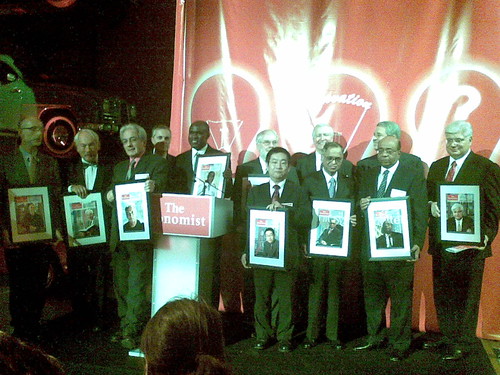
But actually things went rather well, I think, and my next blog post outlines roughly what I would have said, had I not been answering questions the whole time. But first, it's worth describing the context of this uniquely colourful and interesting meeting. The night before the Summit is an Awards Ceremony at the Science Museum. As a Speaker, I was invited, albeit last minute, and brought along my bemused friend Daryl (who I had planned to meet up with). He had great fun in trying to embarass me in this esteemed company, and fracture the delicate artiface of grownup professionalism that I wear rather awkwardly. However, as the champagne flowed, we started to get into our stride - we buttonholed famous Peruvian economist Hernando do Soto for 15 minutes. He's one of my heroes (I think I may have actually used that phrase to him) - his work on identifying the importance of property rights in developing countries has had a profound impact in his lifetime, and as such he now consults to 21 heads of State. His think tank is described by the Economist as one of the two most influetial in the world. We were seated at the table of Economist editor John Micklethwait, and inches away from the procession of Nobel laureats, billionaires and brainiacs that were honored in this year's awards. My shoulders were brushed by some pretty impressive midriffs: scientists who developed a way to do AIDS tests really quickly, the Chairman of India's outsourcing marvel Infosys, the founder and CEO of RIM (garage tinkerer to hero in 10 years); pioneers in LEDs; the guys who invented GMR (memory storage) which made my iPod possible, and finally an African telco entrepreneur who just sold his corruption-free business for $3.4bn. Phew.
At the end of last night it was obvious that I'd already had more than my money's worth and was starting to enjoy myself. The event was expertly managed, with delicious food, crisp timing, inspiring surroundings and ridiculously bright and successful people at every turn. Encouraging words from Tom Standage put me at my ease, and all I had to do now was think through what was the Nokia innovation story that I wanted to tell. I soon realized that actually, we've got a lot to say, the question was picking the right bits. Whether I did or not, you decide. That's the topic of the next post.
Saturday, October 06, 2007
I want to build a tool for hate
I want to build a tool that allows spittle-fuelled invectives, deep dark howling rants and purple prose that takes your breath away. But relax, this isn't a story of bad hatred - of people, politics or puppies. No this is about good hate. Good hate is hatred of bad things. Crime, corruption, inefficiency, lawlessness, thuggery, treachoury, cantankerousness and deeply bad service.
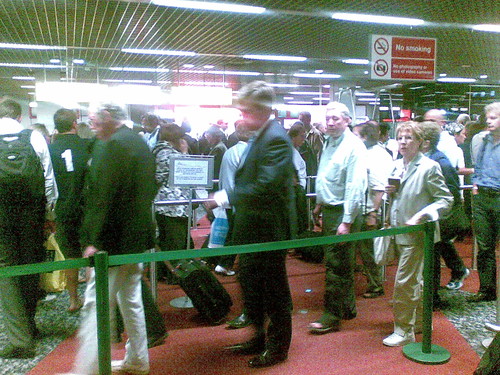
What started this train of thought was a specific incident last week as I ate the gruel of tatty "service" that the beleaguered Heathrow airport serves up cold. Arriving late night in Terminal 4, there was a long queue of several hundred people waiting for passport control, and a separate queue for the iris scanning machine. Now, having had my iris scanned I went up to this shorter line, pleased with the prospect of a sharp exit. After about 5 minutes of waiting around and realizing that the line wasn't getting any shorter, it was clear that the system wasn't letting people through. An official overseeing the mess from the command center then saunters up and says, Nope, the machine's not working, so we'd better go back to the line. By this time, a few other hundred people have arrived, so we stumble back, with more of our lives wasted. So bad enough that the machine wasn't working (happens on about 1 out of 3 times I've tried these machines) but nobody could be bothered to even put up a sign saying sorry, don't waste your time. Just one example, there are countless more, at that airport alone.
My annoyance at the appalling state of our airport is mashed with embarrassment that any foreigners should be exposed to this as the first thing they see, liberally sprinkled with utter helplessness - both due to not being able to do anything about it but also because of my inability to vent my frustration in a satisfactory way. Of course there was huffing and puffing by my co-victims in the queue but we're all in the same boat.
I should shrug it off, toughen up. God knows, as a Londoner I have ample opportunity to feel frustrated with what goes by the name of our public transport service. I felt like jumping up and down and screaming NO, THIS IS COMPLETELY SHIT!! However it's been about 30 years since my last public tantrum, and civil society impedes a direct 1-1 relationship between the rages in my head and my vocal chords.
But, let's leave aside this dark story - the reverse, happier side is also true. I also want to create a tool for Love. Heaping large amounts of love on a person should be easier than it is today. I want to say that I love that building, that organization, that hero that I've never met.
And to an extent the Web does give me a voice to do exactly that. However, it is not really well designed to deal with real things - it prefers to deal with URLs. It organizes by [http followed by indecipherable code] rather than [that which we commonly refer to as...]. Having a naming convention built around real things and real places would be really helpful. Where do I go if I want to complain about Heathrow? Well, if I wanted to complain about a restaurant inside Heathrow I might be lucky, and find something on Yell or Timeout or Squaremeal or LondonEating or wherever. But what about Heathrow itself? This creaky, wheezing behemoth is a major part of our lives, but its online presence is an anodyne, sterilized boilerplate, which clearly has no intention to allow us to peak behind the curtain to the conversations that real people are having with each other about this infernal place, and attempting to have with Heathrow.
What I think we need is a place on the web that can be the hub of discussions around an airport, a brand, a government, a city, a product or, well, just about anything, whether or not the owner in charge likes the idea. Of course these conversations are happening in a fragmented way today, and Google is doing a good job at knitting these together for those who search for them, but this is ad hoc. Each of us enter queries differently, and the results that Google delivers are generally between them and us, with few search terms on brand names delivering the genuine voice of the people rather than the PR department. However, there's no denying - it would be nice to have a global directory of things that we all use and refer to.
Happily, am seeing some small steps in this direction. People-powered customer service directories is not something I knew existed until recently, and now there are two. The founders of Silicon Valley startup Satisfaction were over in London last week to speak at the Future of Web Apps conference, and I've just heard about another startup from South Africa called HelloPeter, which has been doing the same kind of thing for a while. I had a good chat with one of the founders of Satisfaction, Lane Becker, who was also one of the founders of the rather wonderful Adaptive Path. I was struck with the simple proposition of their site - they're going to help your customers have conversations about your brands, so you might as well join in. This level of transparency requires a company to feel good about their product, and their customers, and some impressive, customer-focused companies such as Timbuk2 are already using it to have even more open conversations with their customers.
Well, you can guess the rest. Reared on a Hollywood addiction to happy endings, I'm hoping that need for hate will disappear. So I created a channel for Heathrow at Satisfaction (http://getsatisfaction.com/heathrow) noted my problem, and now wait, patiently and ever optimistic (like those in the line for passport control) that Heathrow - and bad services around the world - will start to listen. And maybe even respond.
Subscribe to:
Posts (Atom)


